Reentry Summit Report: What Happens After Incarceration?
Updated: Nov 17, 2025

Charlottesville is home to more than 700 nonprofits, many dedicated to helping people rebuild their lives after incarceration. Often, however, these efforts operate in silos. The Reentry Summit—a collaboration between the Fountain Fund, Equal Justice USA, the Charlottesville Area Justice Coalition, and the Tom Tom Foundation—set out to change that by bringing together local leaders, service providers, and community members to create a more coordinated, compassionate, and connected reentry system.
“You can’t get well in a cell.”
The phrase is familiar, but its truth endures. Wellness is a community effort—and since 95% of incarcerated people eventually return home, every community has a role to play in ensuring that return is successful. Each year, more than 300 people are released into greater Charlottesville. Altogether, 1 in 48 adults is under some form of criminal legal supervision.
The Reentry Summit emerged from a conviction that Charlottesville already has the people, skills, and passion to do reentry better—if we do it together. The multi-part collaboration between the Fountain Fund, Equal Justice USA, Charlottesville Area Justice Coalition, and Tom Tom Foundation aimed to break down the silos, bridge divides, and strengthen the systems that help people coming home. While no one meeting could “solve” reentry, the right people were finally in the room.
The effort unfolded over a year and culminated in the first-ever Reentry Summit Report, many of whose recommendations have since been adopted by the Albemarle/Charlottesville Reentry Council. This is the story of how conversation turned into collaboration—and collaboration into systemic change.

Part 1: Gathering the Voices
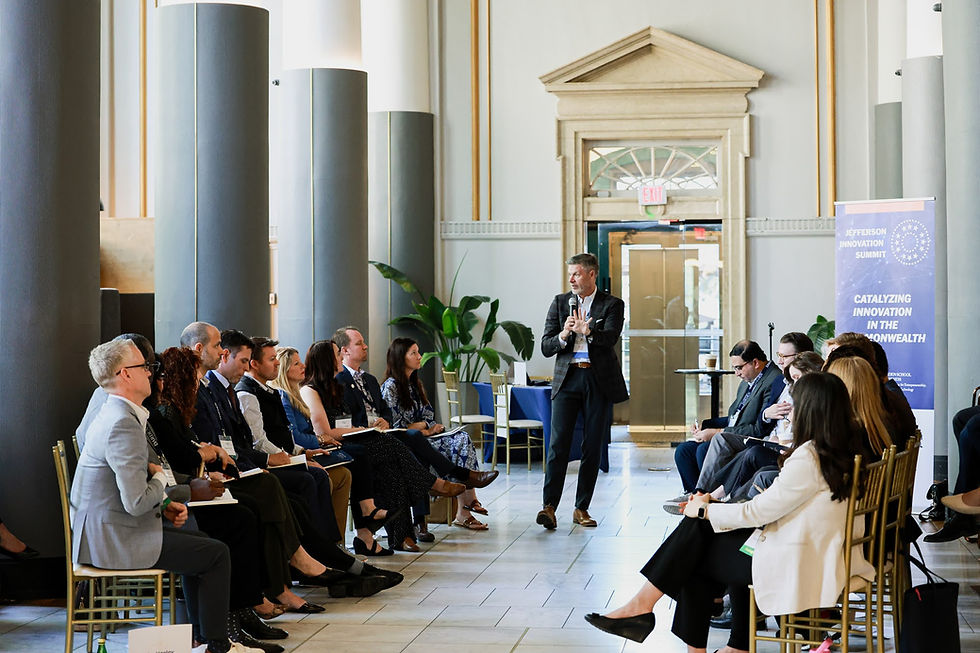
The first summit took place on April 18, 2024, during the 12th Annual Tom Tom Festival. More than 100 people attended—from service providers and faith leaders to policymakers and those with lived experience. The group included the jail superintendent, the mayor, Charlottesville’s police chief, violence interrupters, and restorative justice practitioners.
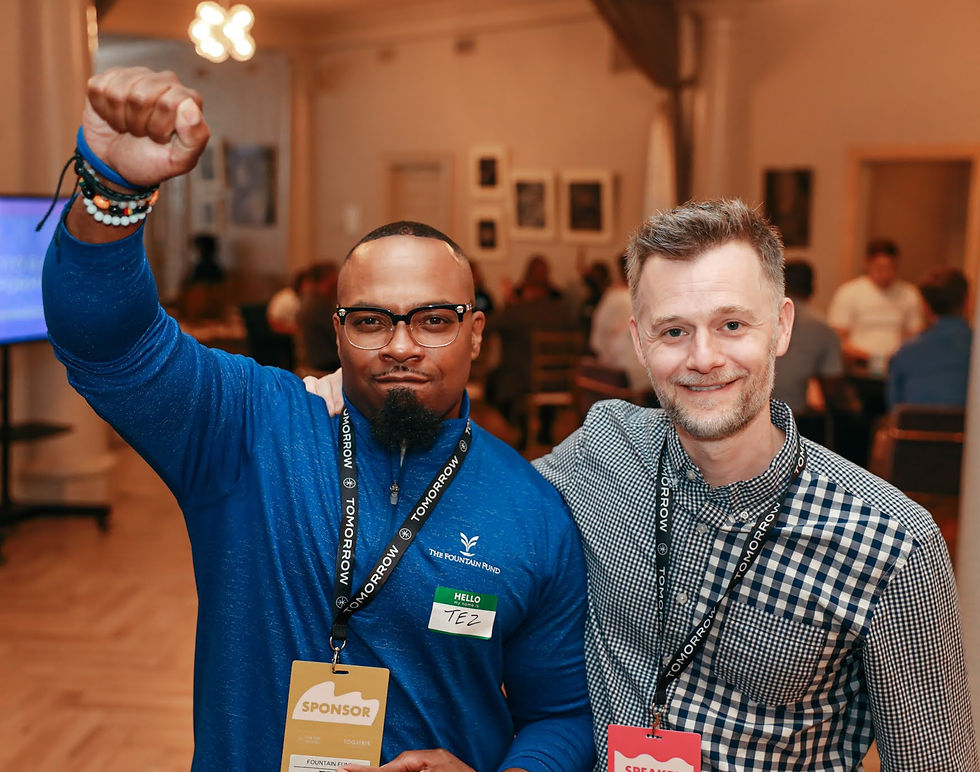
Conveners Martize Tolbert (Fountain Fund) and Sam Heath (Equal Justice USA, Charlottesville Area Justice Coalition) saw the Tom Tom Festival as an opportunity to bring issues of justice to the broader public. Together they designed a two-day reentry program that included a Summit, a Reentry Simulation, a film screening, and reflective jail tours.
The invitation list was key. What began with the Charlottesville Area Justice Coalition’s email list, expanded with Tom Tom supporters interested in justice, and a deep-dive into organizations, community members, and public figures we knew were needed at the table. The Summit was then promoted in justice spaces and anyone interested was welcomed.
Sam Heath reflected on this: “The Reentry Summit was a mix of corralling key people alongside an open-handed invitation to the justice community. We didn’t know the answer to ‘solving’ reentry, but we knew it would surface with the right people in the room. We got the right people.”
With a can-do spirit -- “Community work is the best work!” -- trumpeted Martize Tolbert, his refrain and motto, the excitement in the room was palpable.
At the first summit, participants broke into small groups to answer two central questions: 1) What is your role in reentry in Charlottesville? and 2) What needs to change to better serve returning citizens? They generated more than 35 pages of notes and insights, mapping both the strengths and gaps in the local reentry landscape.
The U.S. has the highest incarceration rate of any nation on earth. Approximately 1.9 million people are confined, or roughly 583 per 100,000 residents.
Part 2: From Data to Direction

After the first Reentry Summit, Martize and Sam partnered with the UVA Center for Community Partnerships to analyze the feedback. Three key themes emerged: reentry must be Coordinated, Comprehensive, and Connected. These themes guided the second Summit on May 21, 2024, where participants moved from dreaming to doing.
The second summit continued to build on the region’s strong network of reentry services—the Cville ID Team, the Fountain Fund, Home to Hope, Network2Work, Pipelines & Pathways, Central Virginia Community Justice, and the Sexual Assault Resource Agency, among others. The Summit encouraged organizations to coordinate efforts, develop shared problems and solutions, and focus on serving clients day-to-day.
Participants joined one of six groups: 1) Every returning citizen gets the opportunity for a job, 2) Access to services and peer support or peer navigators, 3) Access to housing, 4) Faith spaces as reentry partners, 5) Developing, implementing, and sustaining a brick-and-mortar reentry resource hub, and 6) Funding these initiatives.
Each group identified two specific goals and the steps needed to achieve them—practical, data-driven steps to improve reentry in Charlottesville. As one formerly incarcerated neighbor put it, “There are a tremendous number of hurt and damaged people from our process.”
Another attendee reflected, “Nobody wants to be reduced to the worst thing they ever did. These are people from broken systems.”
Part 3: Making the Report & Initial Outcomes

The final summit, held on December 4, 2024, presented key findings, recruited working group members, and shared reports on violence prevention and incarceration trends. Three working groups—Housing, Employment, and Peer Navigators—were adopted by the Albemarle/Charlottesville Reentry Council, while a fourth, Faith Spaces as Reentry Partners, formed organically.
Attendees engaged data related to root causes of violence—such as poverty—and detailed local and regional incarceration statistics, as well as the UVA Center for Community Partnerships’ report The State of Gun Violence in Charlottesville & Albemarle County.
The main focus though was the Charlottesville Reentry Report, presenting the findings from the first two summits.
One of the Summit’s first recommendations—a comprehensive needs assessment of reentry services—was completed by UVA’s Center for Community Partnerships.
The Summit’s working groups on Housing, Employment, and Peer Navigation formed. They continue meeting to this day, building toward more coordinated, comprehensive, and connected systems.
One immediate outcome was that the Albemarle-Charlottesville Regional Jail, which incarcerate about 250 community members, re-examined their uniform policy. The women were in jumpsuits and the men in black-and-white-striped uniforms. Due to advocacy efforts emerging from the Reentry Summit, the jail superintendent—who attended the summit himself—agreed to transition the women into two-piece uniforms last fall and for the men to get out of the black-and-white stripes and into something more humanizing. Result: Humanizing Jail Uniforms.
What’s Next: Long Term

Former Federal Bureau of Prisons Director Colette Peters once said, “Our job is not to make good inmates. It’s to make good neighbors.” That spirit guided the Reentry Summits. Our neighbors coming home from incarceration deserve a community that is ready to welcome and support them.
Early outcomes are already visible—new collaborations among service providers, stronger wraparound supports, and deeper relationships between institutions and individuals. Long term, the summits’ working groups strive for continued policy change, with ideas such as community reentry training sessions and purchasing a building where reentry services can be centralized.
Like a natural ecosystem, a healthy community safety network depends on diversity, interdependence, and complex but not complicated relationships. Over the past two years, Tom Tom has worked alongside the Fountain Fund, Equal Justice USA, and the Charlottesville Area Justice Coalition to host the Reentry Summit series. The vision remains simple: by connecting the efforts already underway, Charlottesville can become a national model for how communities welcome people home.
Coda: The Impact of a Festival
“We aspire for Tom Tom to be more than just a festival,” Paul Beyer said. “It’s an opportunity for civic collaboration—reminding us that community is not a collection of silos, but a network of relationships strong enough to solve problems that no single sector can tackle alone. The Festival can serve as a moment when we all gather to build that reality.”
The theme of the 12th Annual Tom Tom Festival was TOGETHER. It unified the City around a theme of our interconnection and shared future, across hundreds of events and performances.
The festival gave the container, momentum, and promotional resources to grow Martize and Sam’s conversations into a watershed moment for the community at the Reentry Summit. Even before festival week, conversations had begun.
What began in frustration—community members coming home from jail and prison, yet being met with fractured services and a community ill-equipped to welcome them home—morphed into collaboration. The Tom Tom Foundation held Tomorrow Talks that related to justice, which was where Martize and Sam initially met. Their rapport and mutual desire to engage reentry work quickly grew from theory into practice.
At the Festival itself, the ReEntry Summit was a part of a sustained program that brought together nearly 1,000 attendees.
The Reentry Simulation—a public, interactive “game” held in a gymnasium—revealed the systemic barriers people face upon release: restricted housing, limited transportation, inaccessible financial services, and constant bureaucratic hurdles. Participants, who began the exercise calmly, soon found themselves rushing between tables like “Jail” and “DMV,” realizing how nearly impossible it can be to meet basic reentry requirements.
A Screening of A Bridge to Life at the Paramount Theater was a documentary about William Washington and The Bridge Ministry in Buckingham County, which has mentored and trained returning citizens for nearly three decades.
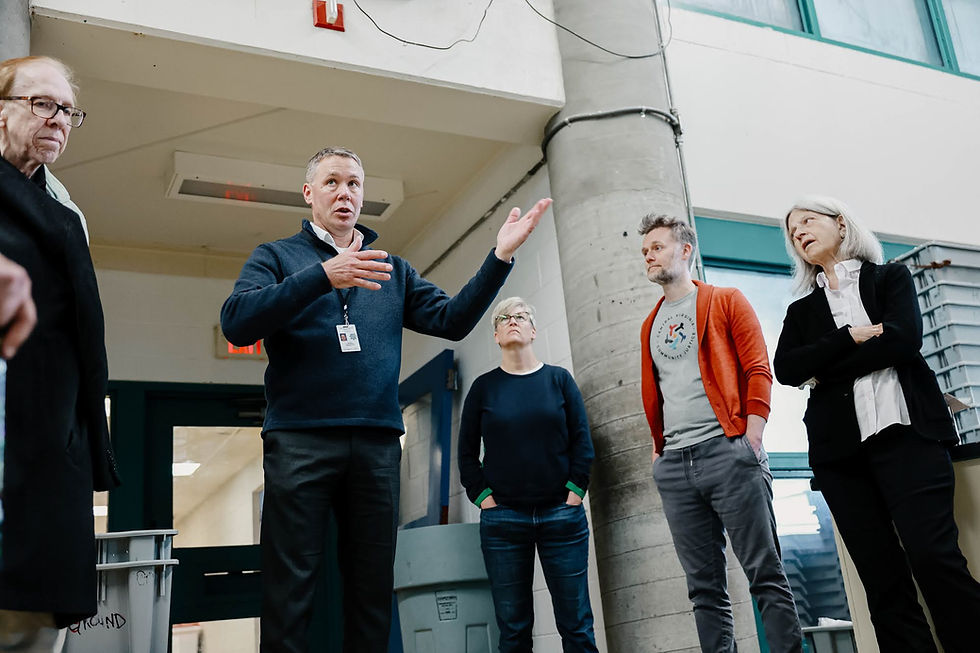
Reflective Jail Tours brought small groups through the Albemarle-Charlottesville Regional Jail, followed by a restorative justice discussion led by Central Virginia Community Justice. At one jail tour, a local philanthropist was so moved by the conditions they encountered, they donated $10,000+ to fund the next phase of restorative mediation.
TOGETHER was the theme of the 12th Annual Festival, and there’s really no better word that describes both the method and motive for the Reentry Summit that resulted.

Read the Reports
Support the Work
Equal Justice USA (forced to close due to federal funding cuts)


About Tom Tom
At the Tom Tom Foundation, our mission is to bring people together to build a brighter tomorrow. Each April, the Tom Tom Festival serves as a civic platform where big issues—like reentry—can be explored through honest conversation, community partnership, and shared imagination.